IT STARTS WITH YOU

Breakfast for picky eaters: simple choices for busy mornings

Breakfast for picky eaters is a familiar, manageable morning meal with the aim of helping children eat before the day begins, without pressure or a separate menu for everyone. This 2026 guide puts predictable choices, age-appropriate textures and less morning negotiation ahead of perfect plates.
TL;DR
- Breakfast for picky eaters works best when a familiar food anchors the meal, with something different offered without pressure.
- Nourishwithdes is best for parents seeking practical breakfast inspiration rather than medical feeding advice.
- Start with your usual foods and a handwritten plan; a cookbook or recipe app is optional.
- Persistent feeding distress, swallowing difficulties or concerns about growth need professional assessment, not another breakfast recipe.
You can explore Nourishwithdes for practical food resources, but your first step needs nothing new: notice what your child already manages comfortably. You do not need to turn breakfast into a lesson about eating well.
Why breakfast planning matters for picky eaters
Breakfast has a particular constraint: your child’s appetite and your departure time do not necessarily agree. A rushed morning also leaves little space for unfamiliar textures, lengthy preparation or a disagreement about which bowl to use.
A predictable breakfast routine gives you fewer decisions to make; it does not guarantee that your child will eat. Keep that distinction close. Your role is to offer suitable food and a manageable setting, not to secure a particular number of bites.
NHS guidance on fussy eating recommends small portions, patient repeated offers and avoiding force. The American Academy of Pediatrics’ HealthyChildren guidance similarly supports offering food without pressure and keeping mealtimes calm. Neither approach requires bribing a child to finish breakfast.
For your 2026 breakfast routine, aim for something you can repeat on an ordinary school morning. Weekend cooking projects are optional, not the standard you need to meet.
How to build a breakfast your child can approach
1. Notice what already feels familiar
Start with observation rather than a shopping list. Does your child accept toast only when it is lightly browned? Is yoghurt welcome in a bowl but refused when fruit is mixed through it? Those details give you somewhere useful to begin.
Write down accepted foods and how you usually serve them. This is a practical planning note, not a diagnosis or a reason to keep every detail unchanged forever. For a child who becomes very distressed around food, seek support rather than deliberately testing their limits.
- List familiar breakfast foods, including simple options such as bread or porridge.
- Note accepted temperatures, textures and serving styles.
- Separate food preferences from known allergies and medical restrictions.
- Keep a familiar option in the kitchen when your household routine allows.
2. Build around one accepted food
An accepted food gives the meal a familiar starting point. Put it alongside another suitable food without making the familiar item a reward for eating something else. There is no need to disguise the addition or announce a challenge.
For example, offer toast with egg served separately, or plain yoghurt with soft fruit beside it. These are general assembly ideas, not recipes verified as appearing in Des’s resources. Adjust ingredients and preparation to your child’s age, allergies and chewing skills.
- Start with a familiar bread, cereal, porridge or other accepted food.
- Offer egg, yoghurt, beans or another suitable protein food alongside when practical.
- Keep sauces, toppings and mixed textures separate if that helps.
- Let your child leave an unfamiliar food without losing the rest of breakfast.
3. Choose a small rotation you can actually repeat
Use a handwritten list before buying a resource. Choose 3 breakfasts your household can prepare, then check that you have the ingredients. Repeating a workable breakfast is more useful than planning variety that creates extra work and wasted food.
If you would like more inspiration, The Little Food Explorer Cook Book is an easy digital download to keep. The Nourishwithdes web-based app is a complementary, evolving resource with over 170 recipes; neither resource guarantees that a particular child will accept a meal.
The cookbook suits parents who prefer a resource to keep, while the app suits those who prefer browsing an evolving collection. App signup requires an email address, a password and email confirmation. Recipe inspiration does not replace individual feeding support.
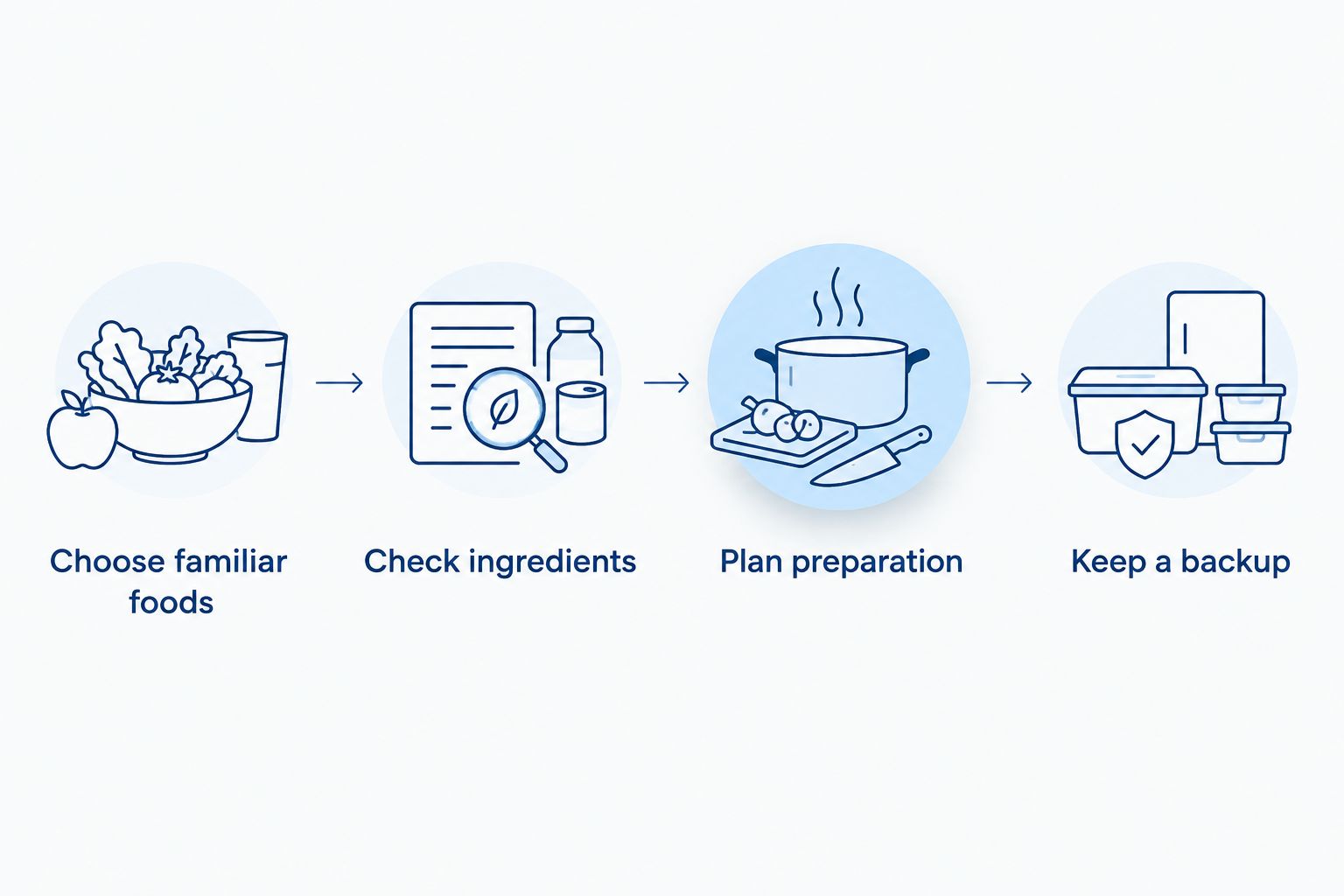
- Choose familiar foods: select meals your child already recognises.
- Check ingredients: include appropriate allergy-safe alternatives where needed.
- Plan preparation: decide what can be assembled before the morning rush.
- Keep a backup: choose a straightforward option for disrupted mornings.
4. Prepare for the rushed version of your morning
Plan for the morning when someone cannot find a shoe, not only the morning when everyone wakes happily. Put out suitable bowls and check ingredients beforehand. Keep perishable food refrigerated until preparation or serving.
A 10-minute preparation window is a planning limit you can choose, not a feeding deadline for your child. If your 2026 routine includes a nursery, preschool or school breakfast, check what is offered and share relevant allergy information with the setting.
- Set out non-perishable ingredients and utensils in advance.
- Wash and prepare suitable fruit using safe storage practices.
- Keep milk, yoghurt, eggs and other perishables properly chilled.
- Check whether breakfast arrangements differ on school and non-school days.
- Avoid asking a child to eat while walking or travelling in a moving vehicle.
5. Offer a manageable choice without negotiating bites
A small choice can give your child a say without asking them to design breakfast from scratch. Ask whether they would like toast or porridge when both are realistic options. Once breakfast is served, avoid turning every mouthful into a discussion.
You can stay warm and interested without praising an empty plate. Talk about the day, sit together when possible and allow your child to notice hunger and fullness. Refusal is information, not a verdict on your cooking or parenting.
- Offer 2 suitable choices rather than an open-ended menu.
- Serve a small initial portion and make more available.
- Avoid bargaining with dessert, screens or rewards for bites.
- Allow touching or smelling a new food without requiring a taste.
- Keep your response neutral when food is left uneaten.
6. Adapt the food before you adapt the expectations
A food that looks simple to an adult can still be difficult for a young child to manage safely. NHS Start for Life and US Centers for Disease Control and Prevention guidance both stress age-appropriate preparation, upright seating and supervision. Eating calmly matters more than finishing quickly.
For this 2026 guide, the safety references are NHS guidance on choking prevention and food allergies, alongside CDC infant and toddler nutrition guidance. Both advise against honey before 12 months. NHS guidance also says not to give whole nuts to children under 5 years; CDC identifies whole nuts as a choking hazard for young children.
- Keep children seated upright and supervise them while eating.
- Cut grapes lengthways into quarters; adapt other round foods appropriately.
- Use nut butter thinly spread, not as a thick spoonful, when suitable.
- Keep whole nuts away from children under 5 years.
- Avoid honey before 12 months, including in prepared breakfast foods.
- Follow an existing allergy care plan and seek advice about suspected reactions.
Compare breakfast options without looking for a winner
The best breakfast option is one your child can manage safely and your household can offer consistently. Each approach below has a useful role and a limitation. None needs to become an everyday rule.
| Option | Best for | What works well | Key limitation |
|---|---|---|---|
| Toast with a separate topping | Children who prefer foods not to touch | Keeps components visible and easy to offer separately | Dry or chewy textures need age-appropriate preparation |
| Porridge or oatmeal | Children comfortable with soft, spoonable food | Can be served plain with additions alongside | Texture and temperature changes can make it less familiar |
| Plain yoghurt with separate sides | Families wanting little morning preparation | Lets children choose whether to combine components | Needs refrigeration and a suitable alternative for milk allergy |
| Egg with a familiar side | Children who already accept egg | Works without mixing everything together | Egg is an allergen; follow local safe-cooking guidance |
| The Little Food Explorer Cook Book | Parents wanting a digital resource to keep | Provides a separate source of meal inspiration | Is not personalised feeding assessment or a promise of acceptance |
| Nourishwithdes recipe app | Parents wanting an evolving recipe collection | Offers over 170 recipes in a web-based resource | Requires an account; recipe suitability still needs checking |
For eggs, UK and US advice differs. NHS guidance permits runny hen eggs with the British Lion stamp for babies and children; other eggs need thorough cooking. The US Food and Drug Administration advises cooking eggs until both white and yolk are firm. Follow the guidance that applies where you live, plus any individual medical advice.
If you prefer a resource rather than building your own list, these two parent-focused options cover cookbook inspiration and general mealtime guidance. Neither replaces advice for feeding difficulties.
Optional resources for parents


Common mistakes parents make with picky-eater breakfasts
Changing every part of the meal at once
A different cereal, unfamiliar milk and new bowl create several changes together. Keep familiar elements while offering something different separately. Your child does not need to accept the addition that morning.
Turning a small appetite into a bargaining session
Counting bites, offering prizes and repeatedly asking for a taste puts attention on compliance. Offer breakfast, stay available and avoid commentary about how much your child eats. Persistent low intake deserves assessment, not stronger persuasion.
Using hidden ingredients as the whole strategy
Blending ingredients is a normal cooking technique, but it does not teach a child what a recognisable food looks or feels like. Avoid misleading children about ingredients, particularly when allergies are involved. Offer suitable foods openly without demanding acceptance.
Expecting a recipe resource to solve feeding distress
More recipes do not assess pain, swallowing problems or growth. Speak to a GP, health visitor, paediatrician or registered dietitian if eating causes distress, the range of accepted foods keeps shrinking or you suspect a deficiency. Choking or breathing difficulty needs emergency help.
FAQ
What's the best breakfast for picky eaters?
The best breakfast for picky eaters starts with a familiar, age-appropriate food and keeps pressure off eating. Offer suitable additions separately, and choose something your household can prepare consistently.
What can I offer if my child refuses cereal?
Cereal is optional; try an accepted alternative such as toast, porridge, yoghurt or egg with a familiar side. Check texture, allergy suitability and preparation for your child's age rather than insisting on a particular breakfast category.
Should I make my child finish breakfast before school?
Do not force your child to finish breakfast. Offer a manageable meal and a calm opportunity to eat; discuss persistent refusal, distress or concerns about growth with a qualified healthcare professional.
Can I serve the same breakfast every day?
A familiar breakfast can be part of a workable routine. Consider the child's overall food intake rather than judging one meal alone, and seek advice if their accepted foods are becoming increasingly limited.
Are these breakfast ideas suitable for babies?
Not every breakfast idea is suitable for every baby. Adapt ingredients and textures to developmental readiness, avoid honey before 12 months and follow NHS or CDC guidance on choking prevention and introducing allergens.
Is a cookbook better than a recipe app for picky eaters?
A cookbook suits parents who want a resource to keep, while an app suits those who prefer an evolving collection. Neither option replaces personalised help for feeding difficulties, and individual recipes still need checking for age and allergy suitability.
What should I change first in our 2026 breakfast routine?
Start by choosing a familiar breakfast and preparing what you can beforehand. Keep the first change small: fewer morning decisions are a useful goal even when your child's eating remains unpredictable.
One last thing
Make tomorrow's breakfast easier before making it different. Put out the bowl, check the familiar food is there and leave the unfamiliar addition optional. A calmer plan is something you can offer; a clean plate is not something you need to earn.
This is general feeding education, not personalised medical advice. If breakfast regularly involves pain, gagging, coughing, distress or concerns about nutrition, ask a qualified healthcare professional for help rather than continuing to experiment alone.