IT STARTS WITH YOU

Dinner ideas for picky eaters the whole family can share

For parents, dinner ideas for fussy eaters are adaptable family meals with familiar foods and optional additions, with the aim of making shared dinners more manageable. Start with something your child already accepts, keep unfamiliar ingredients separate, and let everyone build a plate without pressure to eat the same amount or combination.
TL;DR
- Dinner ideas for fussy eaters work best when familiar foods and optional additions share the table.
- Nourishwithdes is best for parents seeking practical family meal-planning resources without strict food rules.
- Try deconstructed pasta, jacket potatoes or rice bowls before making separate dinners.
- Persistent feeding distress, swallowing difficulties or concerns about growth need professional support.
Why shared dinners matter for families with fussy eaters
A mixed sauce, an unexpected texture or foods touching can make an otherwise familiar dinner feel different to a child. Shared meals become more practical when you change how you serve the food rather than expecting everyone to enjoy an identical plate.
The Little Food Explorer Cookbook is a digital download to keep for family recipe inspiration. It is an optional resource, not a requirement for trying the approach below.
Your job is to offer a manageable meal, not to make every mouthful happen. NHS guidance on fussy eating advises against forcing children to eat and encourages eating together where possible. That leaves room for gentle encouragement without turning dinner into a negotiation.
For your 2026 family routine, begin with meals you already cook. A familiar dinner served differently is a smaller planning task than a completely new menu.
Build shared dinners one small step at a time
These suggestions suit children who already eat family foods, with textures and portions adapted to their development. Babies, children with swallowing difficulties and children following medical diets need age-appropriate or individual guidance rather than a general family menu.
Start with your child's familiar foods
Write down foods your child currently eats, including their usual preparation. Toasted bread and soft bread are different experiences; so are plain pasta and pasta covered in sauce. Recording those details helps you plan what to serve rather than what you hope will be accepted.
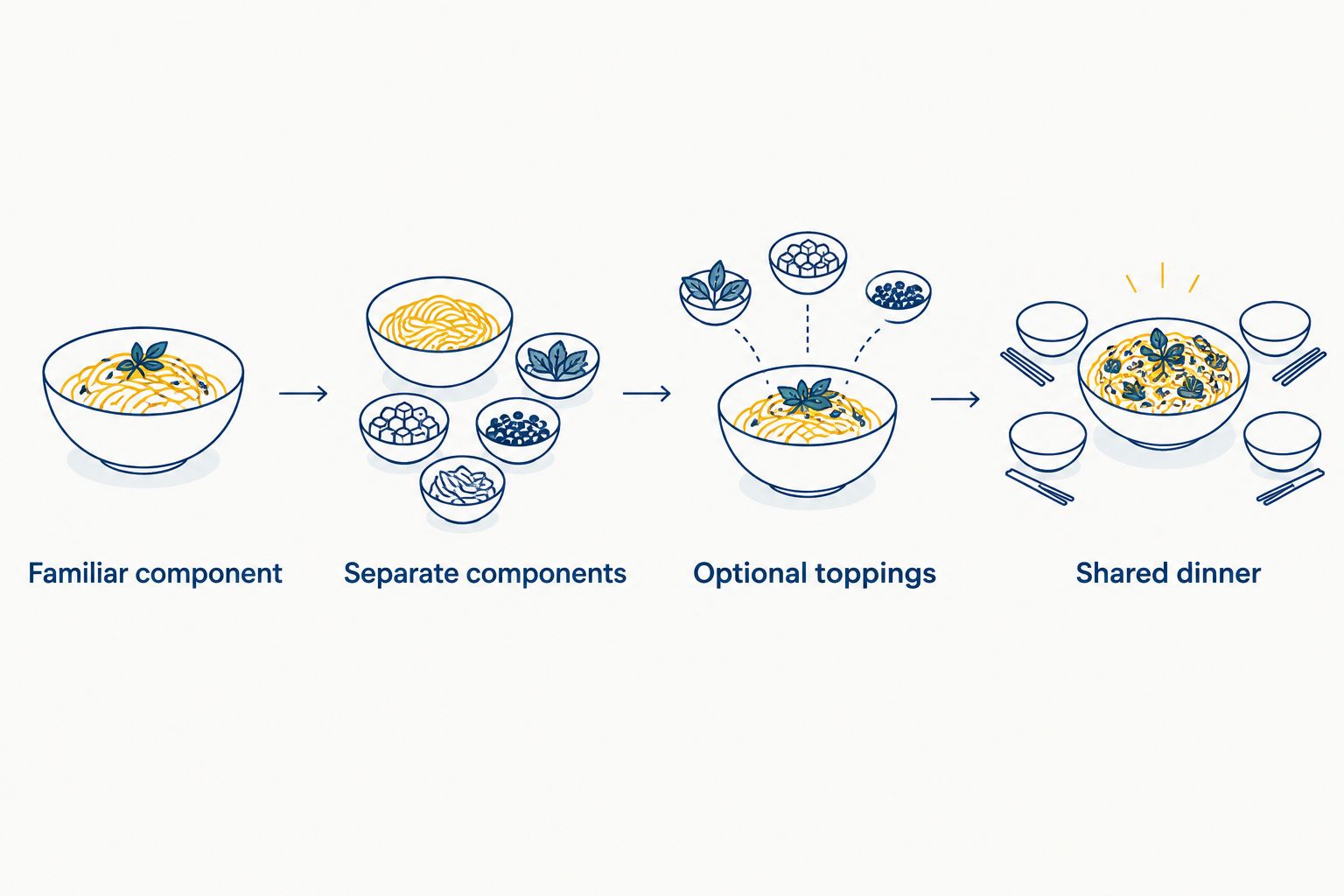
Choose 3 dinners for your first plan, not a whole new week of unfamiliar meals. Give each dinner a familiar component alongside food the rest of the family enjoys. This is a planning suggestion, not a target your child has to meet.
A familiar component makes the meal accessible, but it does not guarantee your child will eat. Appetite varies, and a single dinner cannot tell you whether their overall diet meets their needs.
- Note accepted foods and their usual texture.
- Include a familiar component at each planned dinner.
- Keep an unfamiliar addition optional.
- Offer a small serving, with more available.
- Avoid describing foods or eating behaviour as good or bad.
Separate the parts before combining them
Before mixing everything together, set aside some plain components. Pasta, a protein food, vegetables and sauce can reach the table separately without requiring a completely different recipe.
This is especially useful when adults enjoy strong flavours. Add chilli, dressings or crunchy toppings to individual plates, while keeping the shared base suitable for your child. Check allergies before offering shared toppings, and use separate utensils where cross-contact is a concern.
For example, a pasta dinner can include plain pasta, cooked peas, shredded chicken or beans, and tomato sauce in separate dishes. These are meal-building examples, not recipes claimed to appear in the cookbook or app.
- Reserve plain pasta or rice before adding sauce.
- Serve sauces in a separate bowl.
- Keep toppings optional.
- Separate components before they touch, if that matters to your child.
- Adapt texture and shape for safe eating.
Choose a dinner format that bends
A useful dinner format lets you change a topping or side without rebuilding the entire meal. Start with the option closest to something your child already eats, rather than the one with the longest ingredient list.
Use this table as a 2026 planning shortlist. Each option has a practical advantage and a limitation; none is a promise that a particular child will accept it.
| Dinner option | Best for | How to share it | Key limitation |
|---|---|---|---|
| Deconstructed pasta | Children who prefer plain foods | Offer pasta, sauce, vegetables and chicken or beans separately | Sauce and mixed textures can still be difficult |
| Jacket potato bar | Families with different topping preferences | Split baked potatoes and offer beans, cheese or other suitable toppings | Potato skin or a fluffy texture will not suit everyone |
| Rice bowls | Households already eating rice | Serve rice with separate cooked vegetables and a familiar protein food | Several small dishes create more washing-up |
| Soft tortilla wraps | Children who enjoy choosing fillings | Offer soft tortillas with suitable fillings served separately | A filled wrap can be awkward to hold or chew |
| Omelette with sides | Families who already eat eggs | Serve omelette with bread and separately prepared vegetables | Unsuitable for someone with an egg allergy |
| Fish or bean patties | Children who accept soft patties | Offer patties with potatoes and a familiar vegetable | New ingredients can change an accepted texture |
A jacket potato is a baked potato for US readers; a courgette is zucchini, and an aubergine is eggplant. Use the familiar local name when shopping. Soft tortillas and wraps vary, so choose a texture your child can manage rather than assuming every version is interchangeable.
- Pick a format built around an accepted food.
- Offer a suitable protein food alongside the base.
- Include vegetables without making them a condition for dessert.
- Keep an alternative topping available for adults.
- Repeat a workable format with small variations.
Make your meal plan lighter, not stricter
A handwritten list is enough to begin. Choose your dinners, check the cupboard and write down the missing ingredients. Repeating a meal format is useful; dinner does not need to be a new project every evening.
Nourishwithdes meal-planning resources offer another route when finding ideas takes more energy than cooking. The Little Food Explorer Cook Book is an easy digital download to keep. The live web-based app is an evolving resource with over 170 recipes and a seven-day free trial; creating an account requires an email address, a password and email confirmation.
The cookbook and app are complementary options, not essential purchases. A saved cookbook suits readers who prefer a resource to keep, while the app suits readers who want an evolving recipe resource. Neither replaces individual feeding or medical support.
For a manageable 2026 routine, choose the format you will actually use rather than collecting more ideas than you need.
- Check existing ingredients before choosing dinners.
- Repeat a family-friendly meal format.
- Keep your shopping list in one place.
- Use a cookbook when you prefer a saved reference.
- Consider the app when an evolving recipe resource suits you.
Keep safety separate from food exploration
Trying a new food should never mean accepting an unsafe shape or texture. NHS and US CDC choking guidance both stress adapting food to a child's development and supervising eating. Seat children upright and stay with them while they eat.
The NHS advises against giving whole nuts to children under 5 years. Grapes, cherry tomatoes, hard raw vegetables and other choking hazards also need appropriate preparation; consult the NHS and CDC guidance for the specific food and your child's stage.
For your 2026 kitchen checklist, use national guidance for its stated scope: NHS and Food Standards Agency guidance in the UK, and CDC, FDA and USDA guidance in the US. Their child-feeding, allergen and food-safety resources serve different purposes; a general recipe does not replace them.
- Adapt food size, shape and texture before serving.
- Keep children seated and supervised during meals.
- Check ingredient labels for relevant allergens.
- Prevent allergen cross-contact when preparing shared dishes.
- Follow local guidance for cooking, chilling and reheating.
Notice patterns and ask for help when needed
Look at the wider pattern rather than scoring each plate. A brief note about accepted foods, uncomfortable symptoms or difficult textures can help you explain concerns to a clinician. Avoid turning that note into a record your child feels judged by.
Persistent pain, feeding distress, coughing or choking during meals, suspected deficiencies, or concerns about growth need qualified healthcare support. In the UK, contact your GP or health visitor; in the US, contact your paediatrician. Ask whether a registered dietitian or feeding specialist is appropriate.
General gut-health advice for adults is not a substitute for assessing a child's feeding difficulty. Avoid removing food groups or starting supplements without suitable professional advice.
- Record patterns briefly and neutrally.
- Note discomfort as well as food preferences.
- Raise swallowing concerns promptly.
- Discuss growth or deficiency concerns with a clinician.
- Ask for support before introducing restrictive changes.
Compare planning resources before choosing
The best resource is the one that reduces your planning burden without creating another task. Nourishwithdes offers parent-focused resources, but you can also use your existing recipes and a simple shopping list.
| Option | Best for | Main advantage | Key limitation |
|---|---|---|---|
| Handwritten meal plan | Families with familiar recipes | Starts with food you already cook | You supply the ideas and organisation |
| The Little Food Explorer Cook Book | Parents wanting a digital cookbook to keep | A saved reference for family recipe inspiration | Not individual feeding assessment or treatment |
| Get Your Little Ones to Eat Healthy Guide | Parents wanting practical mealtime guidance | Focuses on making family mealtimes manageable | A general guide cannot assess a child's needs |
| Nourishwithdes app | Readers wanting an evolving recipe resource | Includes over 170 recipes | Requires account setup and email confirmation |
The cookbook and guide below suit different needs: recipe inspiration versus broader mealtime guidance. Choose according to the task you want help with, not a promise that a resource will change your child's eating.
Optional family mealtime resources


A gentle, practical guide designed to make family mealtimes nourishing and fun.
£5
Common mistakes families make with fussy-eater dinners
- Changing every component at once. A different sauce, pasta shape and vegetable can make a familiar dish unrecognisable. Keep something familiar while offering change separately.
- Hiding ingredients and calling the meal unchanged. An unexpected texture can undermine confidence in a familiar food. Describe ingredients simply and avoid misleading your child.
- Using dessert as a reward for vegetables. NHS fussy-eating guidance advises against using food as a reward. Keep encouragement separate from bargaining over bites.
- Expecting siblings to eat alike. Shared food does not require matching portions, textures or preferences. Adapt the serving without comparing children.
- Treating distress as stubbornness. Pain, swallowing problems and intense feeding distress deserve attention, not firmer rules. Seek support rather than escalating pressure.
FAQ
What are easy dinner ideas for fussy eaters?
Deconstructed pasta, jacket potatoes and rice bowls are adaptable starting points when they include foods your child already accepts. Serve sauces and toppings separately, and prepare every component safely for your child's age and abilities.
Should I cook a separate dinner for my picky eater?
A shared meal with a familiar component is a practical starting point instead of planning completely separate dinners. Children with medical diets, allergies or feeding difficulties need individual adjustments and sometimes professional guidance.
What if my child refuses the whole dinner?
Stay calm and avoid forcing, bargaining or shaming. Look at the wider eating pattern, and contact a healthcare professional if refusal persists or you are concerned about intake, discomfort or growth.
Is it better to hide vegetables in dinner?
Blended vegetables can be an ordinary recipe ingredient, but avoid misleading your child about what a meal contains. Keep offering vegetables in safe, manageable forms without demanding that your child eats them.
Can toddlers eat the same dinner as adults?
Toddlers can share suitable family foods when ingredients, texture, shape and seasoning are adapted appropriately. Follow age-specific choking guidance and account for allergies rather than serving an unchanged adult plate.
Does the app replace the cookbook?
The app and cookbook are complementary options. The cookbook is a digital download to keep, while the live web-based app is an evolving resource with over 170 recipes; neither provides individual medical advice.
When should I get help for fussy eating?
Get professional help for persistent feeding distress, pain, swallowing difficulties, suspected deficiencies or concerns about growth. Contact your GP or health visitor in the UK, or your paediatrician in the US.
One last thing
Your most useful 2026 dinner change might happen before food reaches a plate: set aside a plain portion before adding the sauce. You still cook a shared meal, but your child has a familiar place to start. That is a practical step, not a test to pass.