IT STARTS WITH YOU

How to introduce new foods without pressuring your child

Introduce new foods to picky eaters by offering a small, age-appropriate portion alongside something familiar, then letting your child decide whether to eat it. Keep invitations neutral, accept a no and offer the food again another day without bargaining or requiring a taste. Looking, touching or smelling can be part of getting familiar; swallowing does not need to be the goal of every meal.
TL;DR
- Learning how to introduce new foods to picky eaters starts with familiar foods, small portions and no forced bites.
- NHS and CDC feeding guidance supports repeated offers without pressure; there is no guaranteed acceptance timetable.
- Nourishwithdes suits parents seeking practical picky-eater resources, not diagnosis or treatment for feeding difficulties.
- Adapt textures for your child's skills, supervise eating and seek help for choking, feeding distress or growth concerns.
Why this matters
When dinner becomes a test, everyone has more to manage than the food. A calmer approach gives your child room to notice an unfamiliar smell, colour or texture without also having to manage an adult's disappointment.
Your job is to offer suitable food and a supportive setting, not to secure a bite. NHS Start for Life and US Centers for Disease Control and Prevention (CDC) guidance both encourage offering unfamiliar foods again without forcing children to eat.
For your family's 2026 mealtime plans, start with a routine you can actually repeat. The Nourishwithdes approach centres on practical support rather than perfect eating or strict rules.
How do you introduce new foods without pressuring your child?
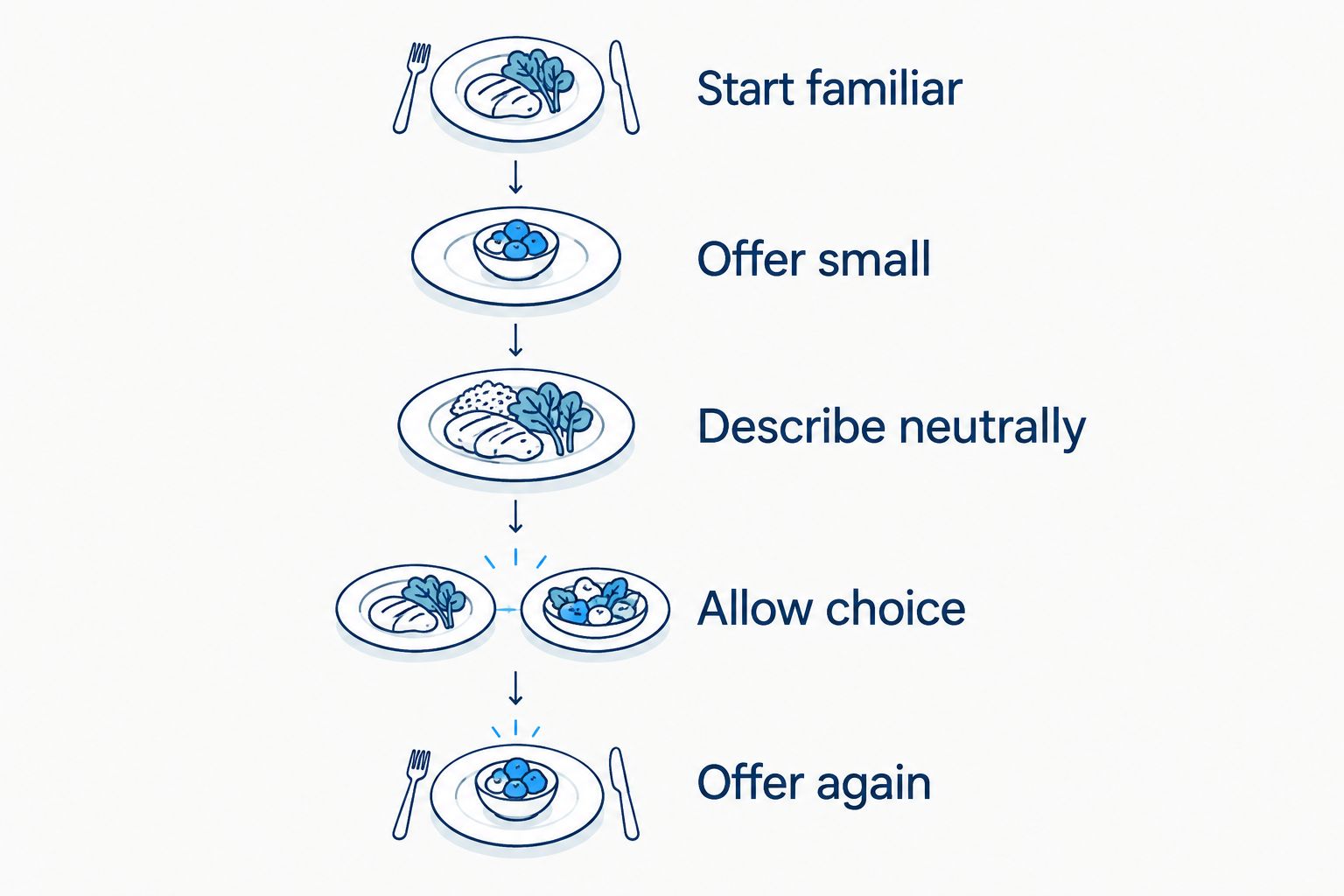
Use the following sequence at an ordinary meal or snack. Choose a time when your child is settled enough to sit safely, rather than turning a tired, upsetting evening into a food-learning session.
- Start familiar. Include a food your child usually accepts. This gives them something recognisable without making the unfamiliar food a condition of eating.
- Offer small. Put a little of the new food alongside the meal, or on a separate side plate if touching foods causes distress. Avoid presenting a large serving as a challenge.
- Describe neutrally. Say what the food is like: crunchy, soft, warm or juicy. Skip claims that eating it makes your child good, brave or pleasing to you.
- Allow choice. Your child can leave it alone. If they explore it, let that happen without asking them to progress to a bite.
- Offer again. Finish the meal without a verdict, and bring the food back on another suitable occasion. Repeated offers are opportunities, not a countdown to success.
A simple invitation is enough: you can explain that the food is there if they want to explore it. Then move the conversation away from how much they are eating.
Keep the invitation small enough that a no really is allowed. Saying there is no pressure, then repeatedly asking for a lick or bite, still makes eating the focus of the meal.
What does low-pressure feeding look like at the table?
Different responses can look encouraging while asking very different things of a child. Use this comparison to check whether your invitation leaves room for refusal.
| Approach | Best for | What it offers | Limitation or concern |
|---|---|---|---|
| Small portion beside familiar food | Everyday introductions | A chance to encounter food without replacing the whole meal | Your child might not interact with it |
| Helping wash or serve food | Children who enjoy practical involvement | Contact with food away from the demand to eat | Participation does not guarantee tasting |
| Calm adult modelling | Shared meals where practical | A chance to see another person eating the food | Repeatedly drawing attention to modelling becomes another prompt |
| Requiring a bite for dessert or a reward | Not recommended for pressure-free feeding | A clear adult demand | Makes tasting a condition rather than a choice |
These approaches are not promises of acceptance. Keep the options that suit your child's age, comfort and abilities, and leave out activities that create more distress.
Why introducing new foods varies between children
A child who welcomes a new pasta shape can still find an unfamiliar sauce difficult. Look at what changed rather than treating every refusal as the same problem.
- Texture: Smooth, lumpy, chewy and crunchy foods ask for different mouth skills and feel different.
- Taste and smell: An unfamiliar aroma or stronger flavour can make a food harder to approach.
- Presentation: Foods touching, a mixed dish or an unexpected change in appearance can matter to your child.
- Appetite and tiredness: A child who is full, unwell or exhausted is not starting from the same place as a settled child.
- Eating skills and discomfort: Difficulty chewing or swallowing, or pain around eating, needs attention rather than more encouragement.
You do not need to diagnose the reason at the table. Notice patterns, make a manageable adjustment and ask a healthcare professional about persistent difficulties.
What can you say when your child refuses a new food?
Accept the refusal without turning it into a negotiation. Acknowledge that they do not want it, leave an accepted food available as part of the meal and move on.
Try neutral observations instead of persuasion. Describe the carrot as crunchy rather than insisting it tastes lovely; mention that the sauce is separate rather than asking for a brave bite.
Avoid comparing siblings or reminding your child that they liked something before. A previous taste does not create an obligation to eat it today, and another child's appetite is not a useful target.
If your child wants an unfamiliar food removed, respond calmly. A separate plate is an option, but tolerating the food nearby should not become a new test they have to pass.
How often should you offer a food your child rejects?
Offer rejected foods again on later occasions, without setting a deadline for acceptance. NHS guidance explains that children can need repeated opportunities to become familiar with food; it does not make a particular attempt a guaranteed turning point.
Keep the experience recognisable when that helps. For example, you can offer soft cooked carrot again before changing the cut, seasoning and serving style all at once.
For a gentle 2026 family routine, choose an ordinary opportunity to reoffer something rather than tracking bites. If keeping notes helps, record practical details such as texture and signs of discomfort—not a score for how well your child performed.
How do you keep new foods safe for your child's age?
Low pressure does not mean leaving safety to chance. Offer food in a form your child can manage, keep them seated upright and supervise eating. NHS Start for Life and CDC choking-prevention guidance both emphasise appropriate preparation and close supervision.
Complementary foods generally begin at around 6 months, alongside signs of developmental readiness. This is not a reason to rush a baby who is not ready, and advice for an older picky eater should not be applied unchanged to a baby.
Round foods need particular care. NHS guidance advises cutting small round foods such as grapes lengthways into quarters; CDC guidance also identifies uncut grapes as a choking hazard. Cutting alone does not make every texture suitable for every child.
The NHS advises against whole nuts for children under 5 years. US CDC guidance also lists whole or chopped nuts among choking hazards for young children. Smooth nut butter needs suitable preparation too: avoid offering a thick spoonful.
Do not give honey to babies under 12 months, following both NHS and CDC guidance. If you adapt a family recipe, check ingredients as well as texture.
What about introducing allergens?
Introducing a common allergen is different from casually reoffering a familiar food. NHS and US National Institute of Allergy and Infectious Diseases guidance support introducing age-appropriate allergenic foods during infancy rather than deliberately delaying them, with additional advice for babies at higher risk.
Ask your child's clinician for guidance if your baby has severe eczema, an existing food allergy or a previous reaction. Do not retry a suspected allergen at home simply to encourage acceptance.
Breathing difficulty, tongue or throat swelling, or a child becoming floppy or unresponsive requires emergency help. Use your local emergency service rather than waiting for feeding advice.
Make the family meal easier, not more impressive
You do not need a separate elaborate recipe to introduce something unfamiliar. Serving suitable components separately can let your child recognise the meal while you offer a small change.
Think pasta with sauce alongside, rather than sauce stirred through every piece. Or offer a little soft cooked courgette—zucchini for US readers—beside familiar rice and another accepted component. These are serving examples, not recipes verified from any particular resource.
In your 2026 meal planning, repeat useful ingredients instead of buying an unfamiliar ingredient for every dinner. The aim is a routine you can sustain, not an increasingly adventurous menu.
Involve your child only if they enjoy it. Washing a pepper, choosing a serving spoon or putting napkins out can be enough; helping prepare food does not create a debt to taste it.
Choose a resource that fits the help you need
Nourishwithdes picky-eater resources are for practical meal inspiration, not assessment of a feeding problem. The cookbook and web-based app are complementary options, but neither replaces medical advice or specialist feeding support.
| Resource | Best for | What is confirmed | What to keep in mind |
|---|---|---|---|
| The Little Food Explorer Cook Book | Parents who want a digital download to keep | A cookbook aimed at families with picky eaters | A cookbook cannot assess swallowing, allergies or nutritional deficiencies |
| Nourishwithdes web-based app | Readers who prefer an evolving recipe resource | Over 170 recipes and a seven-day free trial | Signup requires email, password and email confirmation; recipes still need checking for individual suitability |
Choose according to how you like to plan, not because you feel you should buy more support. The cookbook gives you a downloadable resource; the app offers an evolving collection. Neither guarantees that your child will accept a particular food.
When is picky eating a reason to ask for help?
Seek support when eating affects safety, growth, nutrition or your child's wellbeing. Persistent coughing or choking during meals, difficulty swallowing, pain, repeated vomiting or substantial feeding distress needs professional assessment.
Also ask for help if your child's accepted foods keep narrowing, you suspect a deficiency or meals are becoming difficult for the whole family. You do not have to wait for weight loss before raising concerns.
In the UK, start with your health visitor or GP. In the US, contact your paediatrician or pediatrician. Depending on the concern, they can advise on referral to a registered dietitian, speech and language therapist or other feeding specialist.
Evidence to keep alongside your 2026 feeding plan
The recommendations here draw on established public-health guidance, not a promise that a particular method will work for every child. These sources address different parts of feeding:
- NHS Start for Life, fussy eating guidance: repeated offers, calm mealtimes and avoiding force.
- NHS Start for Life, safe weaning and food-allergy guidance: UK advice on preparation, supervision and introducing allergens.
- CDC Infant and Toddler Nutrition, picky eating and choking-hazard guidance: US advice on repeated exposure and safer food preparation.
- US National Institute of Allergy and Infectious Diseases, peanut-allergy prevention guidance: risk-based advice for introducing peanut during infancy.
National wording is not identical, especially around age-specific food preparation and allergy risk. Use the guidance for your child's age and country, and seek individual advice when health or developmental concerns affect feeding.
FAQ
What's the gentlest way to introduce new foods to picky eaters?
Offer a small, safely prepared portion alongside familiar food and let your child decide whether to eat it. Keep your language neutral and offer it again another day without bargaining.
Should I make my child take just one bite?
No—requiring a bite is not a pressure-free approach. You can offer food and model eating without making tasting a condition of leaving the table or receiving another food.
Does touching or smelling a new food count?
Touching or smelling can be part of becoming familiar with food. Neither needs to lead to tasting, and some children prefer simply having the food nearby.
How many times should I offer a rejected food?
There is no guaranteed number of offers that leads to acceptance. NHS guidance encourages repeated opportunities without force; keep the experience calm rather than counting down attempts.
Can I use the same approach with a baby?
The principle of avoiding force applies, but babies need age-appropriate feeding support and safely prepared textures. Complementary foods generally start around 6 months alongside developmental readiness, with separate consideration for allergens.
What should I change first in our 2026 mealtime routine?
Start by removing a repeated demand, such as asking for a bite before your child can finish. Keep offering suitable food while allowing your child to decide whether to eat it.
When should I speak to a professional about picky eating?
Speak to a healthcare professional about swallowing difficulties, choking, pain, persistent distress, growth concerns or suspected deficiencies. A shrinking range of accepted foods also deserves attention rather than increasingly firm encouragement.
One last thing
Before adding another food to your 2026 family menu, try removing a demand from the table. Stop asking for a taste, stop counting bites or stop describing refusal as bad behaviour.
A calm offer is still a complete offer when your child says no. You can keep making food available, keep safety in view and take this one small step at a time.